A Special Return Flight: Firsthand from Cuba | The Guts, the Grime, and the Glory | Socialism vs. Capitalism | The Death of Lindsey Graham | The True Costs of Military War | What Kind of Society Do We Actually Want?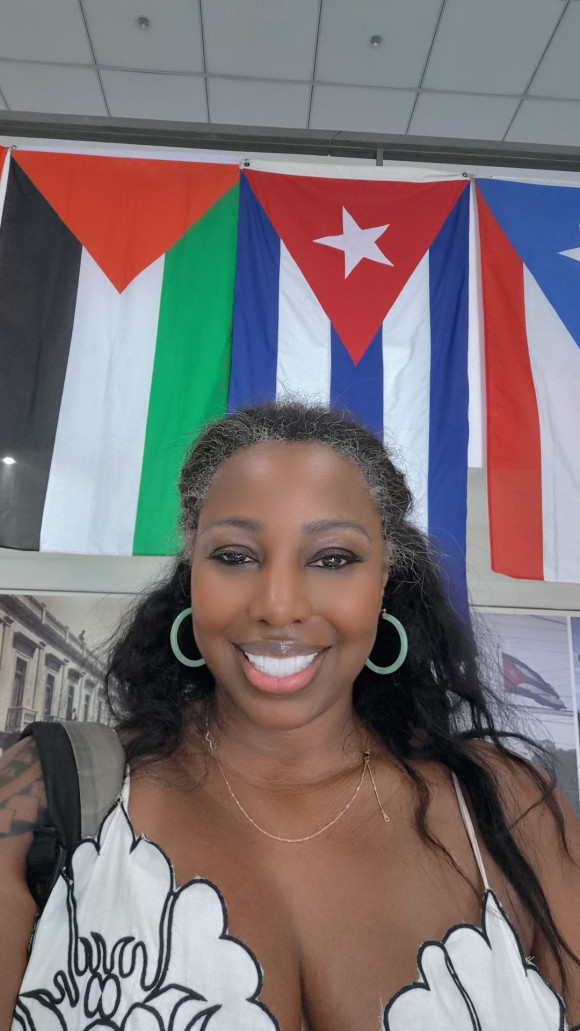
TODAY'S FLIGHT PLAN: Departure: The tarmac at José Martí International Airport, Havana, Cuba, July 22–28, 2026. | Cargo: The 5th Articulación Afrofeminista Cubana Colloquium at the Museo Nacional de Bellas Artes. The July 26 National Holiday in Pinar del Río. The Malcolm X and Martin Luther King Monument. The Literacy Museum. The Federation of Cuban Women. The faces of people living inside a story American media has been telling wrong for sixty years. The death of Senator Lindsey Graham, the spine of US military hawkishness, while returning from Ukraine. The question that cannot stop landing: what kind of society do we actually want to live in? | Altitude: Personal. The most personal flight this program has ever taken. | Fly-Over: National news at 7:00 AM. | Turbulence: Yes. The good kind.
THE BAR CART — HAVANA EDITION
🍹 THE EMBARGO — Sixty years old. Still being served. Available in every country in the world except Cuba and any nation that does business with Cuba. The Helms-Burton Act, passed 1996, punishes foreign companies for trading with the island. This drink was described by Cuba’s ambassador to Brazil as genocide. It has caused an estimated $130 billion in economic damage. Paired with sixteen-hour daily blackouts and hospital supply shortages. Still being ordered by Washington on behalf of corporations whose property was nationalized in 1959.
🍹 THE SOCIALIST — Free healthcare. Free education. Free housing. The lights go out for sixteen hours. Not because the idea failed — because someone else turned them off. Cuba’s literacy rate is 99.8%. Its physician-to-patient ratio is one of the highest on earth. Its infant mortality rate is lower than many US states. This drink was mixed by people who genuinely believe in it, who told me so to my face, in their kitchens and their conference rooms and their concert halls. Contains: community, sacrifice, and an embargo that is not their fault.
🍹 THE CAPITALIST — Everything is for sale. Including your representative, your healthcare, your water system, and eventually your democracy. This drink tastes excellent if you can afford it. The top 1% of Americans own more wealth than the bottom 90% combined. The United States spends more on its military than the next ten countries combined. The richest nation in the history of the world has 37 million people in poverty. This drink is served with a flag and a very long speech about freedom.
🍹 THE LINDSEY GRAHAM — Originally ordered as an anti-Trump special — he called him a 'race-baiting, xenophobic bigot' in 2015. Then remade as a Trump cocktail. Then condemned the January 6 Capitol attack ('Count me out, enough is enough'), then went back to ordering Trump. Ingredients: Iraq War support, Libya intervention, Syria intervention, Ukraine funding, vows to 'free Cuba,' and a final trip to Kyiv on July 10, 2026 to meet Zelenskyy. He died Saturday night July 12 returning home. Age 71. Aortic dissection. The recipe changed depending on who was watching.
🍹 THE MONCADA — July 26, 1953. Fidel Castro and a small group of rebels attacked the Moncada Barracks in Santiago de Cuba. They lost the battle. The revolution began anyway. This drink is named for the moment a people decided that their freedom was worth more than the odds against them. It is Cuba’s National Holiday. I was in Pinar del Río when they celebrated it. I watched. I listened. I brought it back here for this flight.
BLOCK 1 — WHEELS UP: THE PILOT RETURNS
6:00 AM – 6:22 AM
[PRODUCER: This is the most personal opening this program has ever had. No political framing yet. Just Frenchie, back in the cockpit, telling the passengers where she has been and what she saw. Let the personal account lead. The political analysis comes later. Bar cart runs first.]
FRENCHIE: Good morning, passengers. Pilot Frenchie Davis. You are on Flight 995. WBAI 99.5 FM. What’s Goin’ On. I have been gone for a week. And I need to tell you where I went.
FRENCHIE: I have been to Havana.
FRENCHIE: I said I was going to do field reporting from a place I could not name directly, for reasons that anyone following this program would understand. I went there. I am back. And this is that flight.
FRENCHIE: I went to Cuba as part of a humanitarian delegation organized by Rosemari Mealy — a WBAI journalist, historian, and advocate for the freedom of people everywhere on this planet. And I want to say this plainly before anything else: if it were not for WBAI connecting us, I would never have joined this mission. And my life is, once again, forever changed.
FRENCHIE: I attended the 5th Articulación Afrofeminista Cubana Colloquium — two days of presentations and debates at the Museo Nacional de Bellas Artes, the National Museum of Fine Arts of Havana, organized by the Academic Management and Coordination Group and the Faculty of Philosophy, History, and Sociology at the University of Havana. I sat in rooms full of Black Cuban women scholars, activists, and artists who were naming things about their lives, their bodies, their history, and their struggle that I had never heard named in that way, in that room, in that language, by those voices. I attended a concert to celebrate the International Day of Afro-Latin American, Afro-Caribbean, and Diaspora Women at the Museum of Fine Arts. I walked the streets of Havana. I traveled to Viñales in the Province of Pinar del Río.
FRENCHIE: I was there on July 26, Cuba’s National Holiday — the anniversary of the 1953 attack on the Moncada Barracks that marked the beginning of the Cuban Revolution. I watched a people celebrate a date that means to them what July 4th is supposed to mean to us. I visited the Malcolm X and Martin Luther King Monument. I visited the Literacy Museum and met its director, Lazaro Raidel. I attended the Karibuni project. I met with officials from the Ministry of Foreign Relations and ICAP to discuss the US embargo and its devastating impact on Cuban people. I exchanged with ColorCubano. I met with the Federation of Cuban Women — to learn about the role of women in the Cuban Revolution.
FRENCHIE: I came back with more questions than answers. I have seen the guts, the grime, and the glory of two very different systems, and they both have challenges. But one gives — and the other gives at the consequence of far too many. If we the people do not know what kind of government we want, we will never get it. That is the flight today.
FRENCHIE: Bar cart is open. Five drinks. All of them necessary. Phones are open at 212.209.2877. Fasten your seatbelts. We have a lot to cover.
✈ PASSENGERS — CALL IN: PASSENGERS: The pilot just got back from Havana. What do you want to know? What question have you always had about Cuba that nobody will answer honestly? 212.209.2877 212.209.2877
♪ FLIGHT BREAK 1 | "Oye Como Va" — Tito Puente — Celia Cruz version (For the opening. Because the first thing you hear when you land in Cuba is rhythm. It is in the streets, in the buildings, in the people. Afro-Cuban music is the sound of a people who survived everything and turned it into something the world cannot stop listening to. Oye como va.)
BLOCK 2 — WHAT I SAW: THE GROUND REPORT
6:26 AM – 6:46 AM
[PRODUCER: The firsthand account. Frenchie speaks from personal witness. The colloquium. The women scholars. The streets of Havana. The blackouts. The food. The culture. The monuments. What the Cuban people told her directly about what they believe and what has been done to them.]
THE 5TH ARTICULACIÓN AFROFEMINISTA CUBANA COLLOQUIUM
🗒 FIELD MEMO: July 23–24, 2026 | Museo Nacional de Bellas Artes | University of Havana Faculty of Philosophy, History, and Sociology
FRENCHIE: I want to tell you about the women in that conference room. Black Cuban women. Scholars and activists and poets and organizers. They were presenting research, debating theory, naming the specific intersections of race and gender and socialism and the African diaspora in Cuba. The colloquium is organized by the AAfroC — the Academic Management and Coordination Group — with the University of Havana. It is the fifth time they have gathered. And it was unlike anything I have ever sat inside.
FRENCHIE: Here is what I understood in those rooms: there is a Black feminist movement in Cuba that is doing the same work that Black feminist movements are doing in the United States, in Brazil, in the Caribbean — but doing it inside a socialist state, inside an embargo, inside a system that has both empowered them through free education and universal access, and constrained them through the limits on speech and political organization that are real and not to be dismissed. These women are holding all of that at once. And they are still showing up.
THE STREETS OF HAVANA
FRENCHIE: The lights go out. I need to tell you about that. Havana experiences rolling blackouts — not the inconvenient kind where you lose power for two hours and the generator kicks on. The kind where the grid goes down for sixteen hours. Where the water system stops because the pumps need electricity. Where hospitals manage on what they have. Where food that was being kept cold is now not cold. This is the direct result of the energy blockade. The Trump administration imposed new tariffs on the countries that supply Cuba with oil. The lights going out is not a failure of socialism. The lights going out is what an energy blockade looks like from inside the house.
FRENCHIE: And then the lights come back on. And the music starts again. I am not being romantic. I am telling you what I saw. The Cuban people know what is causing this. They told me. In Spanish, through translation, with patience and specificity. They know who turned their lights off. They know it was not their government alone. They know it was the embargo. And they are still there. Still committed to a vision of what their country can be. That is not propaganda. That is what I witnessed.
THE JULY 26 NATIONAL HOLIDAY — PINAR DEL RÍO
🗒 FIELD MEMO: July 26, 1953: Fidel Castro and a small group attacked the Moncada Barracks in Santiago de Cuba. They lost. The revolution began anyway.
FRENCHIE: I was in Pinar del Río for Cuba’s National Holiday. The province celebrated with international delegations. And what I watched was a people who celebrate their revolution not as an abstract political moment but as the day they decided to stop accepting what was being done to them. For Cuban people, July 26 is what July 4th was supposed to be for us before the contradiction became impossible to ignore. It is the day they said: not anymore. On this date, in this province, with delegations from around the world, I stood in that and I felt something shift in how I understand what a people fighting for their own future actually looks like from the inside.
THE LITERACY MUSEUM AND THE FEDERATION OF CUBAN WOMEN
FRENCHIE: Cuba has a 99.8% literacy rate. I visited the Literacy Museum and met its director, Lazaro Raidel. The Cuban literacy campaign of 1961 sent 100,000 young people into the countryside to teach people to read. Some were teenagers. The museum holds the evidence: the handwritten letters of newly literate Cuban adults writing to Fidel Castro to tell him they had learned. I held those letters in my hands. I am not able to fully explain what that felt like.
FRENCHIE: I met with the Federation of Cuban Women — La Federación de Mujeres Cubanas. Founded in 1960. The largest mass organization in Cuba. They told us about the role of women in the revolution, in education, in healthcare, in the arts, in the political structure. They also told us about the challenges — the ways the patriarchal structures that predate the revolution have persisted inside it. They were honest. They did not perform perfection. They named the gap between the ideal and the reality, and they kept working in it.
FRENCHIE: And then I met with other groups that shall remain nameless to protect all stakeholders involved — the Cuban Institute for Friendship with the Peoples. We discussed the embargo. They used the word siege. They asked me to take the truth back to my country. I am doing that right now.
✈ PASSENGERS — CALL IN: PASSENGERS: If you had been in those rooms — with the Cuban Afrofeminist scholars, with the Federation of Cuban Women, with the Ministry of Foreign Relations — what would you have asked? What do you wish you knew about Cuba that you have never been told? 212.209.2877 212.209.2877
BLOCK 3 — SOCIALISM VS. CAPITALISM: THE WORKING DEFINITIONS
6:50 AM – 7:00 AM
[PRODUCER: The ideological block. Define both systems plainly. Then ask the passengers directly: which do you prefer and why? This should feel like a genuine question, not a political position. Frenchie is asking from witness, not from a textbook.]
THE DEFINITIONS — WHAT THESE WORDS ACTUALLY MEAN
SOCIALISM: An economic and political system in which the means of production — factories, farms, resources, utilities — are owned collectively by the community or the state rather than by private individuals. The goal is to meet the needs of all people rather than generate profit for the few. In Cuba, the government owns and operates healthcare, education, housing, and most industries. Healthcare and education are free. Housing is heavily subsidized. The state also controls media, political speech, and economic activity in ways that constrain individual freedoms. Cuba is a socialist state.
CAPITALISM: An economic system in which private individuals and corporations own the means of production and operate for profit in a free market. People compete to buy and sell goods and services. This creates innovation and individual freedom but also produces extreme inequality. The United States is a capitalist country. The top 1% of Americans own more wealth than the bottom 90% combined. The US has no universal healthcare, no free higher education, and the largest prison population on earth. The United States is a capitalist state.
FRENCHIE: Here is what I brought back from Havana: the Cuban people I met — the scholars, the women organizers, the Ministry officials, the people on the street — they believe in their system. Not blindly. Not without criticism. They are not naive. They know the shortages. They feel the blackouts. They understand what the embargo has cost them. And they still believe in the vision of a society that is organized around human need rather than private profit. That is what I witnessed. A people who believe.
FRENCHIE: And then I came home to a country that believes in itself so fiercely it refuses to examine what its system actually produces. A country that spends more on its military than the next ten nations combined while 37 million of its own people live in poverty. A country that calls Cuba a threat while letting its own citizens go bankrupt from medical bills.
FRENCHIE: I am not telling you what to believe. I am telling you what I saw. And I am asking a question: do you know what kind of society you want to live in? Because if we do not know the answer to that question, we will keep accepting the default. And the default has a very specific set of winners and losers.
PASSENGER Q1 Would you prefer to live in a socialist society like Cuba or a capitalist society like the United States? Not what you have been told to prefer — what do you actually want? Free healthcare, free education, communal housing, but the state controls the media. Or: individual freedom, private ownership, open markets, but 37 million in poverty and bankruptcy for getting sick. Take your time. This is the real question. 212.209.2877
PASSENGER Q2 What stops you from wanting a socialist system? Is it the ideology itself? Is it the specific way it has been implemented in Cuba or the Soviet Union? Or is it sixty years of American propaganda that has made the word 'socialist' feel like a threat before you have even examined what it means? 212.209.2877
★ 7:00 AM — FLY OVER: NATIONAL NEWS. Pilot Frenchie returns to the flight deck at 7:05. Passengers, remain buckled. ★
♪ FLIGHT BREAK 2 | "El Cuarto de Tula" — Compay Segundo — Buena Vista Social Club (For the 7 AM return. About a fire. About heat. About a house that burns and the people who keep living in it. Cuba is a house that has been on fire for sixty years and its people are still there, still making music, still celebrating on July 26. El cuarto de Tula.)
BLOCK 4 — LINDSEY GRAHAM: THE SPINE OF MILITARY ENFORCEMENT
7:09 AM – 7:28 AM
[PRODUCER: The Lindsey Graham block. Name his full Cuba record, his full political record, his transformation from Trump critic to Trump's closest defender, and the extraordinary irony of his death: returning from Ukraine, a country he championed while wanting to militarily pressure Cuba. Ask what his death means for US-Cuba policy.]
FRENCHIE: Welcome back, passengers. Pilot Frenchie Davis. I was in Cuba when Lindsey Graham died. I want to tell you what that felt like from there.
FRENCHIE: Senator Lindsey Graham of South Carolina died Saturday night, July 12, 2026. He was 71 years old. He died of an aortic dissection — a rupture of his aorta — while returning from a trip to Kyiv, Ukraine, where he had met with President Zelenskyy on Friday, July 10. His death was announced Sunday morning, July 13. I was in Havana on that Sunday morning.
HIS CUBA RECORD
Embassy opposition: Vowed to block funding for the reopening of the US Embassy in Havana during the Obama administration.
Policy restrictions: Used congressional budget powers to restrict travel, limit US business dealings with the Cuban military, and ban property imports.
Regime change advocacy: Regularly labeled Cuba a 'narco-terrorist' threat and declared the communist government’s 'days are numbered.'
March 2026: The New York Post reported: 'Graham teases that freeing Cuba is next for Trump — stay tuned.' He was pushing the Trump administration to move from Venezuela and Iran toward Cuba.
Public pressure: Consistently pushed for the Trump administration to target Havana with severe economic and potential military pressure.
HIS FULL POLITICAL RECORD
FRENCHIE: Lindsey Graham was one of the most consistent supporters of American military intervention in my lifetime. He supported the 2003 Iraq War, which cost $2 trillion, killed over 200,000 Iraqi civilians, killed 4,497 US service members, and found no weapons of mass destruction. He supported intervention in Syria. He supported intervention in Libya. He was a fierce defender of Israel’s military actions, making polarizing statements about Palestinians. He frequently called for regime change or military strikes against Iran. He proposed federal abortion bans. He voted against same-sex marriage protections. He publicly dismissed the existence of systemic racism in the United States.
FRENCHIE: And then there is the Trump arc. In 2015, during the Republican primaries, Lindsey Graham called Donald Trump a 'race-baiting, xenophobic bigot.' He said Trump was a 'kook' and 'unfit for office.' Then Trump won. And Lindsey Graham became one of his closest golf partners and most vocal defenders. After January 6, he stood on the Senate floor and said 'count me out, enough is enough.' Then he went back. The recipe changed depending on who was in the room.
FRENCHIE: Here is the irony that I cannot stop sitting with: Lindsey Graham died returning from Ukraine — a country he championed with billions in US military funding — while simultaneously pushing the Trump administration to 'free Cuba' through economic pressure and potential military force. Ukraine, it should be noted, has documented government corruption as one of its most persistent internal problems. But Lindsey Graham was supporting Ukraine with American tax dollars while calling for regime change in Cuba, a country with a 99.8% literacy rate and a healthcare system that has kept infant mortality lower than many American states. In Havana on the morning his death was announced, I noticed something: the people I was with did not rejoice. They noted it. They understood what it meant. And they kept going.
WHAT HIS DEATH MEANS FOR US-CUBA POLICY
FRENCHIE: Graham was the spine of military enforcement for the Trump approach to Cuba. He was the most vocal congressional voice calling for escalation — for treating Cuba the way the US has treated Iran and Venezuela. His death removes that spine. What it does not remove is the administration’s broader posture, the SSOT designation, the energy blockade, or the sixty-year embargo. Those are institutional. They survive him. But they lose their most aggressive congressional champion.
FRENCHIE: The question for this flight is not whether Lindsey Graham was a good or bad person. The question is what the pattern of his career tells us about how the United States decides who its enemies are. Because by every objective measure — literacy, healthcare outcomes, infant mortality, life expectancy — the Cuban people are not our enemy. They are people who built something despite our best efforts to dismantle it. And Lindsey Graham spent his career trying to dismantle it more completely.
✈ PASSENGERS — CALL IN: PASSENGERS: What do you think Lindsey Graham’s death means for US-Cuba policy? For the people still living under the embargo? For the Trump administration’s plan to ‘free Cuba’? 212.209.2877 212.209.2877
PASSENGER Q3 Graham supported Ukraine, a country with documented corruption, with billions in American military funding. He simultaneously wanted to militarily pressure Cuba, a country with free healthcare and 99.8% literacy. How do we make sense of those two positions existing in the same political career? What does it tell us about what the United States actually values when it says it is spreading freedom? 212.209.2877
BLOCK 5 — THE TRUE COSTS OF MILITARY WAR
7:32 AM – 7:50 AM
[PRODUCER: The costs of war block. Name the specific numbers. The Iraq War. Afghanistan. The Cuba embargo. The contrast between what war costs and what social investment could provide. Then the fear question: what if capitalism ended? What would actually happen?]
WHAT WAR ACTUALLY COSTS
Iraq War: $2 trillion spent. Over 200,000 Iraqi civilians killed. 4,497 US military deaths. One million Iraqis displaced. No weapons of mass destruction. The country remains in instability 23 years later.
Afghanistan War: $2.3 trillion spent over 20 years. 2,448 US service members killed. Approximately 70,000 Afghan civilians killed. The Taliban retook Afghanistan the same week US troops left. Twenty years of 'nation-building' undone in days.
Cuba embargo cost: An estimated $130 billion in economic damage to Cuba over 60 years. This is not a war with bombs. It is a war with banks and tariffs and shipping restrictions and medical supply prohibitions. The bodies are quieter. The casualties are more diffuse. But they are real.
US military budget 2026: The United States spends more on its military than the next ten countries combined. That money comes from the same tax base that underfunds schools, infrastructure, healthcare, and the social safety net that keeps people out of poverty.
FRENCHIE: I want to ask you something. What could $4 trillion in war spending have built in the United States? Four trillion dollars toward universal healthcare: every American could have access to medical care from birth to death with money left over. Four trillion dollars toward free public university education: every American student could graduate without debt with money left over. Four trillion dollars toward affordable housing: the US homelessness crisis would end. Four trillion dollars toward clean water infrastructure: Flint, Michigan would be a memory and every school in America would have safe drinking fountains.
FRENCHIE: Instead: 4,497 US service members died in Iraq. 2,448 died in Afghanistan. Hundreds of thousands of civilians in those countries died as well. The Taliban is back. ISIS filled the vacuum in Iraq. And the United States still has millions of unhoused people, 37 million in poverty, and a healthcare system that bankrupts people who get sick.
FRENCHIE: I came back from Havana asking: what are we actually afraid of? If socialism is the threat — if Cuba’s model is so dangerous that sixty years of embargo, an energy blockade, and an SSOT designation are the appropriate response — what exactly are we protecting? Is it freedom? Or is it the concentration of wealth that depends on a system where healthcare is a product and education is a debt and housing is a speculation and war is a market?
WHAT IF CAPITALISM ENDED?
FRENCHIE: Here is what the people who profit most from capitalism want you to fear: if the system changed, everything would collapse. The shelves would be empty. The hospitals would fail. The innovation would stop. The lights would go out.
FRENCHIE: I just came back from a place where the lights went out. And you know why the lights went out in Cuba? Not because socialism failed. Because the United States cut off the fuel supply. Cuba’s lights went out because of capitalism’s most powerful tool: economic punishment for trying to build something different.
FRENCHIE: The truth is: every system has costs. Cuba’s socialism has costs. I saw them. The limited freedoms. The constraints on political speech. The ways the state both protects and controls. But the United States’ capitalism has costs too. And those costs are measured in 37 million people in poverty, in medical bankruptcies, in the 200,000 Iraqi civilians who died in a war fought for reasons we were lied to about. Those costs are just distributed more quietly. More routinely. In ways we have been taught to call normal.
FRENCHIE: If we the people do not know what kind of government we want, we will never get it. That sentence came to me in Havana. I brought it home.
PASSENGER Q4 What are you most afraid would happen if the United States moved away from a purely capitalist system toward something more socialist? Name it specifically. And then ask yourself: is that fear real, or have you been taught to have it? 212.209.2877
PASSENGER Q5 What is one thing the Cuban system does better than the United States? And what is one thing the US system does better than Cuba? Be honest about both. 212.209.2877
BLOCK 6 — FINAL APPROACH: WHAT I BROUGHT HOME
7:52 AM – 8:00 AM
FRENCHIE: Passengers, we are on final approach. Let me bring this flight home.
FRENCHIE: I went to Havana because WBAI gave me the connection to a woman named Rosemari Mealy. I want to say her name again and let it land where it deserves: Rosemari Mealy. A journalist, a historian, an activist, a woman baked in history and passion and a fever for free people. She organized this delegation. She created the space where people like me could walk into a room with Black Cuban women scholars and Ministry of Foreign Relations officials and the Federation of Cuban Women and come out the other side understanding the world differently. If it were not for WBAI and the network it builds between people committed to this work, I would never have gone. My life is once again, for the third or fourth time in ways I cannot fully account for, forever changed.
FRENCHIE: I brought back questions. Here they are.
FRENCHIE: What gives a government its legitimacy? Is it the ballot box? Cuba has elections — you just cannot vote for someone who opposes the revolution. Is it the welfare of the people? Cuba has free healthcare, free education, and a literacy rate of 99.8%. Is it the people’s belief in it? I sat in rooms with Cuban people who believe in their system with the same conviction that Americans are supposed to believe in theirs. What makes one legitimate and the other not?
FRENCHIE: What is freedom? Is it the freedom to vote for anyone but have no healthcare? Or the freedom to have healthcare but no ballot choice? Is it the freedom to start a business? Or the freedom to not lose your home because you got sick? I do not know the complete answer. I know both systems have given some people some of those freedoms and withheld others. I know the Cuban people did not choose the embargo. I know the American poor did not choose to be poor in the richest country in human history.
FRENCHIE: And I know this: Lindsey Graham spent his career wanting to militarily pressure or change Cuba, while supporting a war in Iraq that killed 200,000 civilians and found nothing, and a war in Afghanistan that the Taliban won twenty years later. He died returning from Ukraine, a country with documented corruption that he funded with American tax dollars, while calling Cuba — with its 99.8% literacy rate — a narco-terrorist state. That is what the United States’ definition of freedom looks like from the outside. I looked at it from the inside for a week. I am back. And I have a great deal more to say.
FRENCHIE: For the full account of my time in Havana — the colloquium, the Literacy Museum, the July 26 celebration, the meetings with government officials, the concert for Afro-Latin American, Afro-Caribbean, and Diaspora Women — I am creating a dedicated segment on the WBAI website. This is what your donations make possible. The real story. The story that corporate media will not tell. Stay with wbai.org. Stay with this program. And tell someone else to listen.
♥ A very special thank you to Rosemari Mealy — a woman baked in history, passion, and a fever for free people. And to Sohini, who co-organized this journey with grace and purpose. If it were not for WBAI connecting us, I never could have joined this mission. My life is once again forever changed.
FRENCHIE: 212.209.2877. This is Pilot Frenchie Davis. Flight 995 has landed. WBAI 99.5 FM. We will see you next week. And we have so much more to tell you.
✈ PASSENGERS — CALL IN: FINAL CALL: After this flight, what is the one question you are going to carry with you into your week? What shifted? What do you want to know more about? 212.209.2877 212.209.2877
♪ FLIGHT BREAK 3 | "Hasta Siempre, Comandante" — Carlos Puebla (The close. Written in 1965 as a tribute to Che Guevara when he left Cuba for Bolivia. An anthem of the Cuban revolution. Of a people who believe in what they are building enough to dedicate their lives to it. 'Aquí se queda la clara / la ent rañable transparencia / de tu querida presencia / Comandante Che Guevara.' Here remains the clear, the deep transparency of your beloved presence. For Cuba. For the people I met. For the questions I brought home.)
PILOT’S QUICK REFERENCE CARD
Frenchie’s Cuba Trip — The Schedule
July 22: Arrived Havana
July 23–24: 5th Articulación Afrofeminista Cubana Colloquium | Museo Nacional de Bellas Artes | University of Havana
July 24 PM: Concert for International Day of Afro-Latin American, Afro-Caribbean, and Diaspora Women
July 25: Travel to Viñales, Pinar del Río | Pre-holiday solidarity exchanges
July 26: Cuba’s National Holiday (Moncada Barracks, 1953) | Pinar del Río
July 26 PM: Malcolm X and Martin Luther King Monument | Return to Havana
July 27: Literacy Museum + Director Lazaro Raidel | Karibuni project
July 28: MINREX/ICAP officials on the embargo | ColorCubano | Federation of Cuban Women (FMC)
July 28 PM: Farewell dinner, re-entry prep with Rosemari and Sohini
July 29: Return flight
Lindsey Graham — Confirmed Facts
Died Saturday night July 12, 2026 | Age 71 | Aortic dissection
Had just returned from Kyiv, Ukraine where he met Zelenskyy on Friday July 10
Cuba record: blocked embassy funding under Obama | called Cuba 'narco-terrorist' | wanted to 'free Cuba' next after Venezuela
Political arc: called Trump 'race-baiting xenophobic bigot' (2015) → became Trump’s closest ally
Jan 6: 'Count me out, enough is enough' → then returned to Trump support
Supported: Iraq War, Libya, Syria, Ukraine | Called for strikes on Iran | Proposed federal abortion ban | Dismissed systemic racism
The Costs of War
Iraq: $2 trillion | 200,000+ Iraqi civilians killed | 4,497 US military deaths | No WMD found
Afghanistan: $2.3 trillion | 20 years | 2,448 US military deaths | Taliban retook power immediately after withdrawal
Cuba embargo: est. $130 billion in economic damage over 60 years
US military budget: more than next 10 countries combined
Working Definitions
SOCIALISM: Collective/state ownership of production | Goal: meet human needs not generate profit | Free healthcare, education, housing | Cuba example: free services, state controls media and political speech
CAPITALISM: Private ownership of production | Goal: profit in free market | Individual freedom and innovation | US example: open markets, extreme inequality, 37M in poverty, no universal healthcare
Three Music Breaks — Cuban Music
Break 1: 'Oye Como Va' — Tito Puente (Celia Cruz version) | Opening | The Afro-Cuban rhythm of a people who survived everything
Break 2: 'El Cuarto de Tula' — Buena Vista Social Club | 7AM return | About fire, heat, and people who keep living inside the burning house
Break 3: 'Hasta Siempre, Comandante' — Carlos Puebla (1965) | The close | The anthem of the Cuban revolution | For the people Frenchie met
WBAI 99.5 FM — What’s Goin’ On? — Flight 995 — Pilot Frenchie Davis — Thursday July 31, 2026 — 6–8 AM EST — 212.209.2877 — wbai.org
ON CUBA AND WHAT FRENCHIE WITNESSED
☎️ “I held letters written by newly literate Cubans in 1961 — adults who had just learned to read, writing to their government to say: I can read now. When was the last time you felt that kind of relationship between a people and their government? Have you ever?”
☎️ “The Cuban women I met at the Afrofeminist Colloquium were scholars, activists, and organizers inside a socialist state, inside an embargo, doing Black feminist work. They named their country’s failures AND its achievements in the same breath without apology. Can you do that for yours?”
☎️ “I watched Cuba celebrate July 26 — the day in 1953 when a small group of rebels attacked the Moncada Barracks, lost the battle, and started a revolution anyway. What day in your own history would you be willing to lose the battle for? Is there one?”
☎️ “The Federation of Cuban Women was founded in 1960. It is the largest mass organization in Cuba. They told me about the women who built the revolution AND about the patriarchy that survived inside it. They did not choose between pride and critique — they held both. What would it mean to hold both things about America at the same time?”
ON SOCIALISM, CAPITALISM, AND THE SYSTEM QUESTION
☎️ “Cuba has free healthcare, free education, a 99.8% literacy rate, and one of the highest physician-to-patient ratios in the world. The United States has 37 million people in poverty and a healthcare system that bankrupts people who get sick. Which one of those countries is a failed state? Why won’t anyone ask that question on CNN?”
☎️ “Name one thing that capitalism has given you personally that you would not be willing to give up. Now name one thing capitalism has taken from you that you never got to have. Which list is longer?”
☎️ “The US government calls Cuba’s system dangerous. The US government also spent $4 trillion on wars in Iraq and Afghanistan and left both countries less stable than it found them. What exactly is the US government qualified to call dangerous?”
☎️ “If a country offered you free healthcare, free university education, free housing, and guaranteed employment — but the government controlled the media and limited political opposition — would you take it? What if that was the trade? Be honest.”
☎️ “Socialism is called revolutionary because it seeks to replace private ownership with collective ownership and transfer power from the wealthy to the working class. By that definition — is what you actually want revolutionary? And are you willing to say so out loud?”
ON LINDSEY GRAHAM AND THE COSTS OF WAR
☎️ “Lindsey Graham called Cuba a narco-terrorist state while supporting Ukraine with billions in American tax dollars — a country with documented government corruption as one of its most persistent internal problems. Help me understand the consistency. What principle was he actually applying?”
☎️ “Graham died returning from Ukraine on July 12th. He wanted to ‘free Cuba’ next. He supported the Iraq War, Libya, Syria, Afghanistan. He proposed federal abortion bans and dismissed systemic racism as nonexistent. When a senator with that record dies, what is the appropriate public response? What are we allowed to feel? What are we supposed to say?”
☎️ “The United States spent $2 trillion on the Iraq War. No weapons of mass destruction were found. Over 200,000 Iraqi civilians were killed. What accountability has anyone faced for that? And what does the absence of accountability tell you about who this system actually protects?”
☎️ “What would you do with $4 trillion? Because that is roughly what the United States spent on Iraq and Afghanistan. I am asking literally: if you had $4 trillion and the ability to spend it on the American people instead of on wars that didn’t work — what would you build?”
ON ROSEMARI MEALY, WBAI, AND THE BIGGER PICTURE
☎️ “This flight exists because WBAI connected me to Rosemari Mealy, who connected me to a delegation, which connected me to a week in Havana that changed my life. What has WBAI given you that you couldn’t get anywhere else? And have you ever donated to make sure someone else gets to receive it?”
☎️ “I came back from Cuba with more questions than answers. What is a question you have been carrying about this country — or any country — that nobody will answer honestly on the radio? Ask it now. 212.209.2877.”
