We Decide: America at the Crossroads with Jenna Flanagan
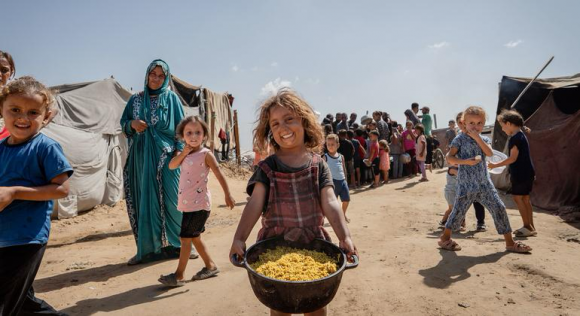
In Gaza, Aljazeera is reporting that the Gaza Health Ministry says it has only about half of the medicine it needs to take care of the beleaguered population still suffering from lack of the basics including shelter. The BBC reports that United Nations supported experts are warning that while Gaza's food supplies are improving, conditions remain "highly fragile."
According to the Gaza Health ministry, close to 400 Palestinioans have been killed and close to 1,000 wounded since the start of the Oct. 10 Trump ceasefire. In the two years after the Hamas attack, before the cease fire, over 70,000 Palestinians were killed, including tens of thousands of women and children, in what has been widely described as a genocide.
According to the Guardian, 2025 has been a deadly year for journalists, particularly those based in Gaza with the International Federation of Journalists reporting that 111 journalists have been killed worldwide, with nearly half of them in Gaza. All told, more than 240 Palestinian reporters have been killed since the Hamas attack on Oct. 7th that killed over 1,100 civilians.
In the B Block, we zero in on the western corporate news biases that color the way the genocide in Gaza has been covered with Robin Andersen, professor emeritus at Fordham University and author of the upcoming book The Complicit Lens: US Media Coverage of Israel's Genocide in Gaza.
In our D Block, we discussed why 2025 was such a dangerous year for journalists around the world with Clayton Weimers, Executive Director of Reporters Without Borders USA, the North American branch of Reporters Without Borders/Reporters sans frontières. That organization's "Round-up 2025" gathers data of the number of reporters killed, detained, kidnapped, or missing around the world.
According to Reporters Without Borders Round-up 2025, the number of murdered journalists rose again, "due to the criminal practices of military groups - both regular and paramilitary - and organised crime. At least 53 of the 67 media professionals killed over the past year are victims of war or criminal networks."
The Reporters Without Borders Round-up 2025 found that 503 journalists were currently detained around the world. The world's largest prison for journalists is China with 121 reporters currently behind bars with Russia (48) now in second place with 48. China also imprisons more foreign journalists than any other state.
ROARING 20s TO TRUMP'S 2020s
It was a century ago that Harold Ross and his wife Jane Grant, a correspondent for the New York Times, founded the New Yorker magazine, with its unique blend of fiction, satire, poetry, criticism, breakthrough journalism, and, well yes, those indispensable cartoons.
So, how would someone capture that awesome arc of journalistic history that would include the New Yorker's bringing the initial first hand accounts of the complete devastation of Hiroshima, Japan after the US dropped the first atomic bomb that incinerated tens of thousands of civilians in an instant?
They would call documentary filmmaker Marshall Curry, who won an Oscar for THE NEIGHBORS' WINDOW, a short narrative film that he wrote and directed. He was previously nominated for Academy Awards for his documentary films, STREET FIGHT, A NIGHT AT THE GARDEN, and IF A TREE FALLS: A STORY OF THE EARTH LIBERATION FRONT.
Curry's film, the New Yorker at 100, recounts the challenges the New Yorker faced historically with changes in corporate ownership, technology and journalism itself. He takes us inside the production of the New Yorker's special century anniversary edition and along the way captured the behind scenes view of New Yorker writers and editors sweating out Election Night 2024.
In the era of social media and instantaneous hot takes, Curry argues its the New Yorker's commitment to robust fact checking that's helped it to endure.
In our A Block, our reporter roundtable with Laura Jedeed, Washington DC correspondent David Levinthal, and Egberto Willes, host of KPFT's Politics Done Right, discuss President Trump's 18-minute prime time address which House Minority Leader Hakeem Jeffries described on MS Now as "unhinged" and the continuing escalation in US-Venezuelan tensions with U.S. forces trying to seize a third oil tanker off the coast of Venezuela.